
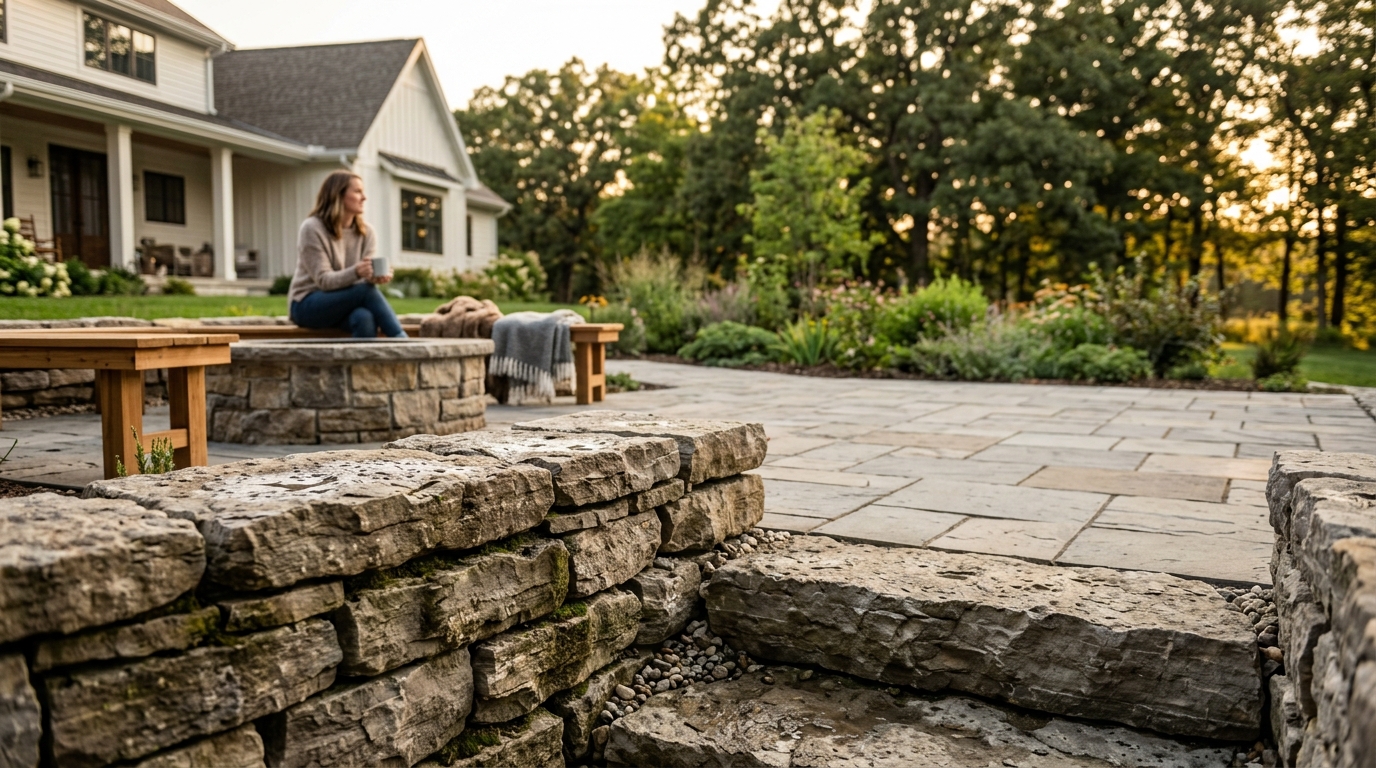
Homeowners in Eastern Iowa face unique environmental challenges that dictate the longevity of outdoor structures. According to recent industry data, well-designed hardscaping can increase property value by up to 20 percent. This statistic highlights why material selection is not merely an aesthetic choice but a critical financial investment. At Heyday Landscaping, we have spent decades analyzing how local weather patterns impact outdoor infrastructure. We understand that the freeze-thaw cycles common in Cedar Rapids and Iowa City demand materials with superior durability and drainage capabilities.
Paver Patio and Pathway Materials
Pavers are the cornerstone of modern residential landscaping. They offer a blend of structural integrity and design flexibility that natural stone often lacks. The primary categories of pavers include concrete, clay brick, and natural stone. Each material serves a distinct purpose in creating functional outdoor living spaces.
Concrete Pavers
Concrete pavers are the most popular choice for homeowners seeking durability and cost-effectiveness. These units are manufactured under high pressure, resulting in a dense, non-porous surface that resists cracking. Concrete pavers are available in a vast array of colors and textures, allowing for custom designs that mimic natural stone. They are particularly effective in regions with heavy snowfall because their modular nature allows for expansion and contraction without structural failure.
Clay Brick Pavers
Clay brick pavers offer a timeless aesthetic that ages gracefully over time. The firing process creates a material that is highly resistant to fading and wear. While initially more expensive than concrete, clay bricks often provide a higher return on investment due to their enduring appeal. They are ideal for creating classic, rustic pathways that complement traditional home architectures.
Natural Stone Pavers
Natural stone pavers, such as bluestone, slate, and travertine, provide unmatched organic beauty. Each piece is unique, ensuring that no two patios look exactly alike. However, natural stone requires more maintenance to prevent staining and erosion. It is best suited for homeowners who prioritize aesthetic uniqueness over low-maintenance requirements.
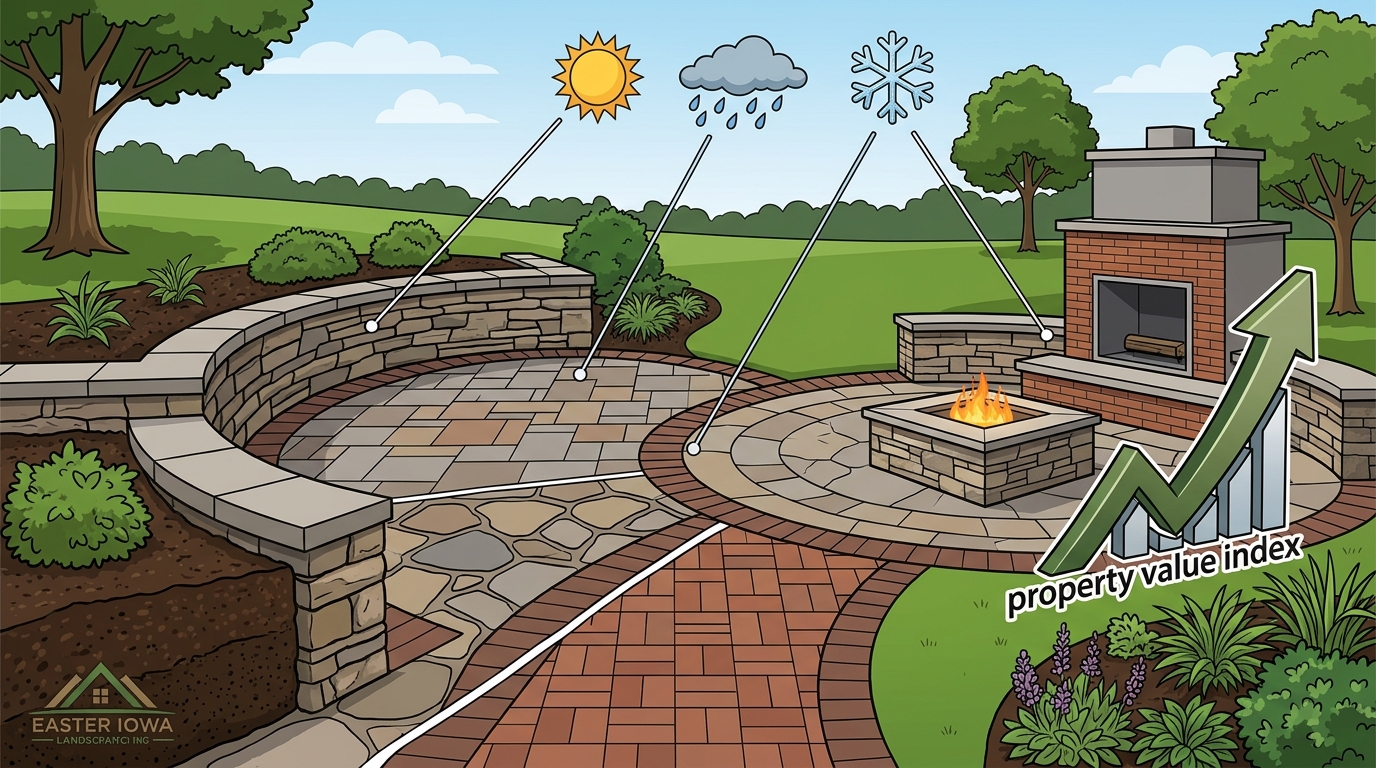
Retaining Wall Block Systems
Retaining walls are essential for managing elevation changes and preventing soil erosion. In the hilly terrain surrounding Iowa City and Marion, IA, these structures are often necessary to create usable flat spaces for patios and gardens.
Segmented Retaining Wall Blocks
Segmented retaining wall blocks are engineered units designed to interlock without mortar. This flexibility allows the wall to settle slightly with the ground, reducing the risk of collapse. Retaining walls constructed from these blocks are highly resistant to the hydrostatic pressure caused by frozen soil. They are also easy to install, making them a cost-effective solution for mid-sized projects.
Mortared Stone Walls
Mortared stone walls offer a more traditional, monolithic appearance. They are incredibly strong and can support significant loads. However, they are less forgiving of ground movement. In areas with expansive clay soils, mortared walls may crack if the foundation shifts. They are best used in stable, level environments where aesthetic permanence is the primary goal.
Fire Pit Kits and Fire Features
Fire features extend the usability of outdoor spaces into the cooler months. They create a focal point for social gatherings and provide warmth during Iowa winters. The choice of material for fire features must prioritize heat resistance and safety.
Fire Pit Kits
Pre-fabricated fire pit kits offer convenience and consistency. They are designed to fit together seamlessly and often include liners to protect the surrounding pavers from heat damage. These kits are ideal for homeowners who want a quick installation with professional-grade results. They come in various styles, from modern geometric shapes to rustic stone looks.
Custom Fire Features
Custom fire features allow for complete creative control. They can be integrated into outdoor kitchens, seating walls, or standalone structures. Custom builds often use refractory concrete or natural stone to withstand extreme temperatures. These features require expert craftsmanship to ensure proper ventilation and heat dissipation. They are best suited for large-scale projects where the fire feature is a central design element.
Comparing Material Durability
Selecting the right material requires balancing aesthetics, budget, and longevity. The table below summarizes the key characteristics of common hardscaping materials used in residential projects.
| Material Type | Durability Rating | Maintenance Level | Aesthetic Style | Best For |
|---|---|---|---|---|
| Concrete Pavers | High | Low | Modern to Traditional | Patios and Walkways |
| Clay Brick | Very High | Low | Classic/Rustic | Historic Homes |
| Natural Stone | High | Medium | Organic/Elegant | High-End Landscapes |
| Retaining Wall Block | Very High | Low | Structured/Engineered | Elevation Changes |
| Fire Pit Kits | High | Low | Varied | Outdoor Living Centers |
Understanding these differences is crucial for long-term satisfaction. For instance, while natural stone is beautiful, it may require sealing every few years to prevent staining. Concrete pavers, on the other hand, rarely need more than occasional cleaning. This distinction impacts the total cost of ownership over decades of use.
Key Takeaways
- Local Expertise Matters: Heyday Landscaping has served Cedar Rapids and Iowa City since 1991, providing deep insight into regional soil and weather conditions.
- Material Selection Impacts Value: Proper hardscaping can increase residential property value by up to 20 percent, making it a smart financial decision.
- Durability is Key: Concrete pavers and retaining wall blocks offer the best balance of strength and cost-effectiveness for Iowa's climate.
- Fire Features Extend Usability: Installing fire features allows homeowners to enjoy their outdoor spaces year-round, even during cold winters.
- Design Flexibility: Paver systems allow for complex patterns and colors, enabling personalized designs that match any home architecture.
- Maintenance Requirements: Natural stone requires more upkeep than manufactured pavers, which should be considered in the long-term budget.
- Professional Installation: Proper base preparation and drainage are critical to prevent heaving and settling, which only experienced contractors can ensure.
Frequently Asked Questions
What is the most durable material for pavers in freezing climates?
Concrete pavers are generally considered the most durable for freezing climates due to their high density and resistance to freeze-thaw cycles. They are manufactured to withstand significant pressure and temperature fluctuations without cracking.
How much do retaining walls cost per square foot?
The cost of retaining walls varies based on height, material, and site accessibility. Generally, segmented block walls are more affordable than mortared stone walls. A detailed estimate requires a site-specific consultation to account for soil conditions and drainage needs.
Can I install a paver patio myself?
While DIY paver installation is possible, it requires significant labor and expertise in base preparation. Improper installation can lead to uneven surfaces and drainage issues. Professional installation ensures longevity and proper grading.
What is the difference between a fire pit kit and a custom fire feature?
A fire pit kit is a pre-fabricated unit designed for quick installation and consistency. A custom fire feature is built on-site using specific materials to match the landscape design. Custom features offer more aesthetic flexibility but require more time and cost.
How do I choose the right color for my pavers?
Color choice should complement the home's exterior and the surrounding landscape. Lighter pavers reflect heat and stay cooler, while darker pavers absorb heat. Consider the overall style of your home, whether modern, rustic, or traditional, when selecting colors.
What is the lifespan of a well-maintained paver patio?
A properly installed and maintained paver patio can last 25 to 50 years or more. The longevity depends on the quality of the base, the pavers themselves, and the frequency of maintenance such as joint sand replenishment.
Do I need a permit for hardscaping projects?
Permit requirements vary by municipality. In many cases, minor hardscaping like patios does not require a permit, but retaining walls over a certain height or structural changes may. It is best to check local regulations in Cedar Rapids or Iowa City before starting.
Request Your Consultation
Transforming your outdoor space requires careful planning and expert execution. Heyday Landscaping is ready to help you select the best materials for your residential project. We provide free consultations to discuss your vision, budget, and timeline. Contact us today to schedule your appointment and start building the backyard of your dreams.