
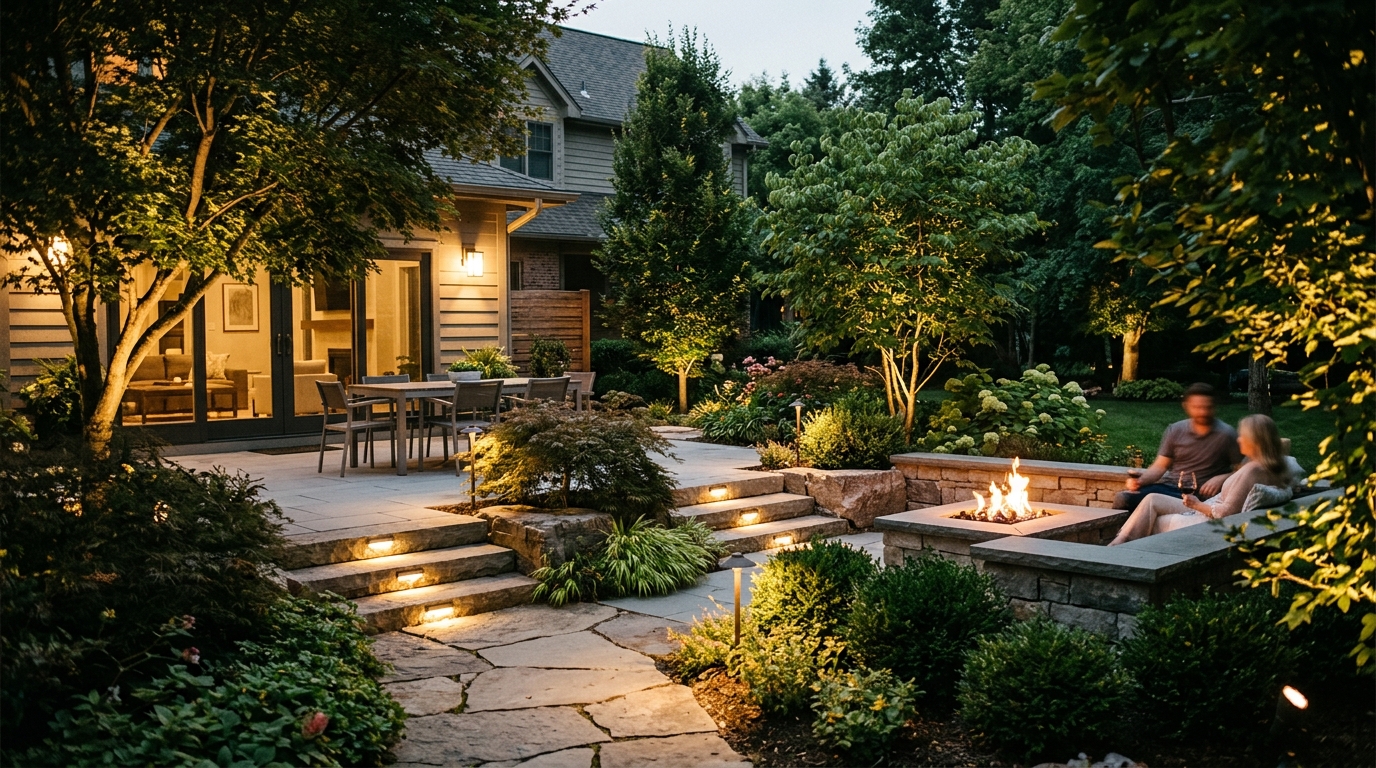
Outdoor lighting transforms a standard yard into a functional extension of your home, yet the margin for error in installation is surprisingly narrow. According to the Illuminating Engineering Society, improper lighting design can reduce usable outdoor space efficiency by up to 40% due to glare and poor contrast ratios. Many homeowners attempt DIY installations only to discover that their initial setup creates harsh shadows, drains batteries prematurely, or fails to withstand Iowa winters. At Heyday Landscaping, we have spent decades refining the art of exterior illumination to ensure safety, aesthetics, and longevity. This guide outlines the critical pitfalls to avoid when planning your outdoor lighting project. (Products ndash Heyday Landscaping)
Understanding Your Lighting Goals
Before purchasing a single fixture, you must define the purpose of your lighting scheme. Outdoor lighting is not merely about visibility; it is about creating atmosphere and security. Landscape lighting serves three primary functions: safety, security, and aesthetics. Safety lighting illuminates pathways and steps to prevent trips and falls. Security lighting deters intruders by eliminating dark corners around your property. Aesthetic lighting highlights architectural features, trees, and hardscapes to extend your living space into the evening hours. (Pavers amp Slabs ndash)
Many homeowners make the mistake of treating all areas equally. You do not need the same intensity of light on a flower bed as you do on a driveway. A layered approach is essential. This involves combining low-voltage path lights with uplighting for trees and accent lights for architectural details. Without a clear plan, your yard will look cluttered and chaotic rather than curated and elegant. Heyday Landscaping uses 2D and 3D renderings to visualize these layers before any wire is buried, ensuring the final result matches your vision. (Fire Pit Kits ndash)
Voltage Drop and Wiring Errors
One of the most technical and common mistakes in outdoor lighting is ignoring voltage drop. Low-voltage systems typically operate at 12 volts. As electricity travels through wire, it loses power over distance. If you run a long run of wire to the farthest light without calculating the gauge and load, the lights at the end of the line will appear dim or flicker. This is known as voltage drop. To prevent this, you must use thicker gauge wire (such as 10-gauge) for longer runs or break your system into multiple zones with separate transformers.
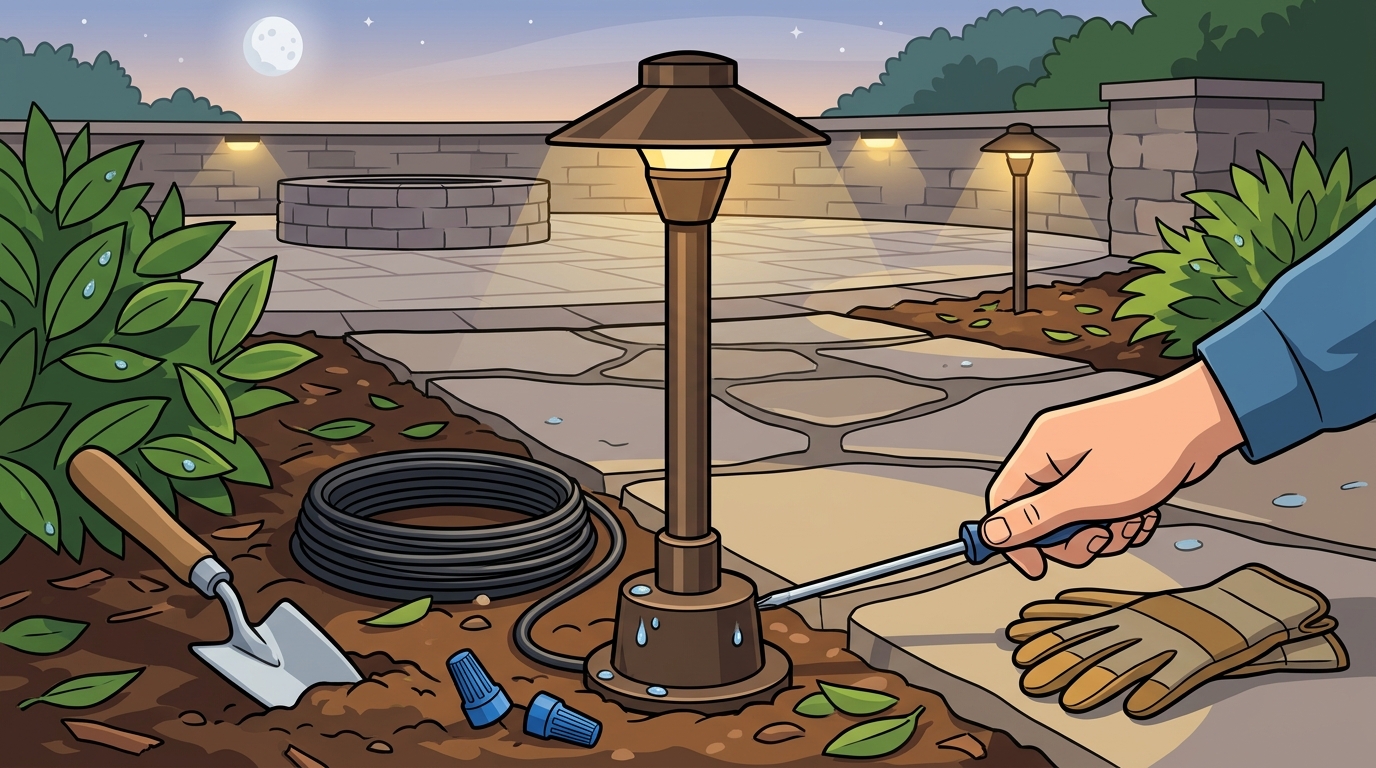
Another critical wiring error is improper burial depth. Outdoor wires must be buried at least six to eight inches deep to protect them from lawn mowers, tillers, and frost heave. If you simply lay wires on the surface or bury them too shallow, they will be severed during routine yard maintenance. Furthermore, all connections must be made using waterproof connectors and placed in junction boxes. Exposed wire splices will corrode quickly, leading to system failure. Proper wiring architecture is the backbone of a reliable lighting system.
Poor Placement and Glare Issues
Glare is the enemy of outdoor lighting. Glare occurs when a light source is directly visible to the eye, causing discomfort and reducing the ability to see details in the surrounding area. This often happens when lights are placed too low or aimed incorrectly. For example, placing a path light too close to a walkway can shine directly into the eyes of pedestrians, creating a blinding effect rather than illuminating the ground.
To avoid glare, lights should be positioned to cast light downward or outward, never directly at eye level. Uplighting trees requires careful angling to avoid shining the bulb into windows or neighboring properties. This is known as light trespass, which can lead to complaints from neighbors and potential code violations. Proper placement also involves considering the height of the fixture. Path lights should be spaced evenly to create a rhythmic guide, while accent lights should be placed at a distance that allows the beam to spread naturally. Heyday Landscaping ensures every fixture is aimed precisely to enhance your home's architecture without causing visual discomfort.
Neglecting Weatherproofing Standards
Outdoor lighting fixtures are exposed to rain, snow, ice, and extreme temperature fluctuations. A common mistake is using indoor-rated fixtures outdoors or failing to verify the IP (Ingress Protection) rating of the equipment. An IP65 rating, for instance, means the fixture is dust-tight and protected against water jets. Without adequate weatherproofing, moisture will enter the fixture, causing short circuits, corrosion, and premature bulb failure.
In regions with harsh winters, such as Eastern Iowa, freeze-thaw cycles can crack plastic housings and damage internal components. It is crucial to select fixtures made from durable materials like brass, stainless steel, or high-impact polymers. Additionally, the transformer must be installed in a location that is protected from direct water exposure and has adequate ventilation to prevent overheating. Heyday Landscaping uses only commercial-grade, weather-resistant fixtures designed to withstand the specific climatic challenges of the Midwest.
Ignoring Maintenance Access
Outdoor lighting systems require regular maintenance. Bulbs burn out, wires can be damaged, and transformers may need resetting. A frequent oversight is burying transformers or junction boxes in inaccessible locations. If you bury a transformer under a patio or deep within a flower bed, servicing it becomes a nightmare. You will have to dig up the area every time there is an issue, which can damage your landscaping in the process.
Transformers should be installed in accessible locations, such as near a fence line or in a dedicated utility box that is easy to open. Similarly, light fixtures should be placed where they can be reached with a ladder or step stool for bulb replacement. Planning for maintenance from the start saves time and money in the long run. It also ensures that your lighting system remains operational and beautiful for years to come. Heyday Landscaping designs systems with serviceability in mind, ensuring that every component is reachable and replaceable.
Professional Design vs. DIY
While DIY lighting kits are available at big-box stores, they often lack the customization and durability of a professionally designed system. DIY kits typically come with fixed wire lengths and generic fixtures that may not fit your specific landscape contours. Professional designers like those at Heyday Landscaping create custom layouts that account for soil type, plant growth, and architectural nuances. We also handle the complex electrical calculations required to prevent voltage drop and ensure code compliance.
Furthermore, professional installations come with warranties and support. If a light fails or a wire is damaged, you have a dedicated team to resolve the issue. DIY systems often leave homeowners to troubleshoot electrical problems without expert guidance. The cost of a professional installation is an investment in the value and usability of your home. It transforms your backyard into a retreat that you can enjoy year-round. For more insights on creating the perfect outdoor space, explore our Outdoor Edit Blog.
Comparison of Lighting Approaches
| Feature | DIY Kit Installation | Professional Design (Heyday) |
|---|---|---|
| Customization | Limited to pre-set layouts | Fully customized to landscape |
| Fixture Quality | Generic plastic components | Commercial-grade brass/stainless |
| Electrical Planning | Basic voltage calculations | Advanced load balancing |
| Maintenance | Homeowner responsibility | Supported service network |
| Aesthetic Impact | Uniform, often cluttered | Layered, architectural focus |
Key Takeaways
- Proper lighting design reduces glare and enhances safety by up to 40%.
- Voltage drop is a critical technical factor that affects light brightness over distance.
- Fixtures must have appropriate IP ratings to withstand Iowa weather conditions.
- Transformers and junction boxes must be accessible for routine maintenance.
- Professional design ensures compliance with local electrical codes and standards.
- Heyday Landscaping has served Eastern Iowa since 1991 with expert craftsmanship.
- Custom lighting extends your living space and increases property value.
Frequently Asked Questions
How deep should outdoor lighting wires be buried?
Outdoor lighting wires should be buried at least six to eight inches deep to protect them from lawn mowers and frost. This depth ensures the longevity of the electrical connections and prevents accidental damage during yard work.
What is the best type of fixture for Iowa winters?
Brass and stainless steel fixtures are ideal for Iowa winters because they resist corrosion from salt and moisture. Plastic fixtures can become brittle and crack during freeze-thaw cycles, leading to water intrusion and failure.
Can I install outdoor lighting myself?
While DIY kits are available, they often lack the customization and durability of professional systems. Professional installers handle complex electrical calculations and ensure code compliance, which DIYers may overlook.
How often do outdoor light bulbs need to be replaced?
LED outdoor bulbs typically last for many years, but incandescent bulbs may need replacement annually. Regular maintenance checks are recommended to ensure all fixtures are functioning correctly and safely.
What is voltage drop in landscape lighting?
Voltage drop is the loss of electrical power as it travels through wire. It causes lights at the end of a long run to appear dim. Using thicker gauge wire or breaking the system into zones prevents this issue.
Do I need a permit for outdoor lighting?
Permit requirements vary by locality. In many areas, low-voltage lighting does not require a permit, but high-voltage systems do. Heyday Landscaping ensures all installations comply with local regulations and codes.
How does lighting enhance home security?
Lighting deters intruders by eliminating dark corners and making it difficult to hide. Motion-sensor lights and strategically placed path lights create a visible perimeter that discourages unauthorized access.
Ready to Transform Your Outdoor Space?
Avoiding these common mistakes ensures your outdoor lighting system is safe, beautiful, and durable. Heyday Landscaping offers expert design and installation services for Cedar Rapids, Iowa City, and Eastern Iowa. Contact us today to schedule your free consultation and start building your backyard retreat.