
Essential Spring Lawn Preparation Standards for Eastern Iowa Homeowners
Eastern Iowa homeowners face a unique set of challenges when the snow finally melts. The transition from a frozen, dormant landscape to a vibrant green lawn requires precise timing and specific techniques to avoid damaging the turf. According to recent regional agricultural data, proper spring aeration can increase water infiltration rates by up to 40%, significantly reducing runoff and promoting deeper root systems. This guide outlines the critical standards for lawn care in the Cedar Rapids and Iowa City regions, ensuring your yard survives the harsh winters and thrives in the humid summers. (Lawn and Turfgrass) (Products ndash Heyday Landscaping)
Step 1: Post-Winter Lawn Assessment
Before any equipment touches the ground, you must evaluate the health of your turf. Winter in Eastern Iowa brings freeze-thaw cycles that can heave grass roots out of the soil. Look for signs of winter kill, which appears as brown, dead patches where the grass has failed to survive the cold temperatures.
Check for ice dam damage near foundations and driveways. These areas often suffer from salt exposure and physical compaction from snow removal equipment. If you notice significant thinning, do not panic. Cool-season grasses common in Zone 5, such as Kentucky Bluegrass and Tall Fescue, have the capacity to recover if treated correctly. However, early detection is vital. Delaying assessment until late spring can result in weed establishment that is difficult to eradicate later in the season.
For a detailed understanding of plant hardiness in our region, refer to the Plants for Zone 5 resources available on our site. Understanding your specific grass type will dictate the rest of your preparation strategy. (Lawn and Turfgrass)
Step 2: Debris Removal and Dethatching
As temperatures rise, the first physical task is clearing debris. This includes fallen branches, old mulch piles, and any remaining snow. More importantly, you must address thatch. Thatch is a layer of dead grass stems and roots that accumulates between the soil surface and the green vegetation.
Thatch is a barrier to nutrient absorption. If this layer exceeds half an inch in thickness, it prevents water, air, and fertilizer from reaching the soil. In Eastern Iowa, where humidity levels can spike in summer, excessive thatch also creates a breeding ground for fungal diseases.
Use a dethatching rake or a power dethatcher to remove this layer. Perform this task when the soil is slightly moist but not soggy. If your lawn is newly established, avoid aggressive dethatching, as it can damage young roots. For older lawns, this step is non-negotiable for long-term health.
Step 3: Core Aeration Standards
Core aeration is the single most effective practice for reversing soil compaction. Over time, foot traffic, snow load, and heavy equipment compress the soil, reducing pore space. This compaction suffocates roots and limits their ability to access oxygen.
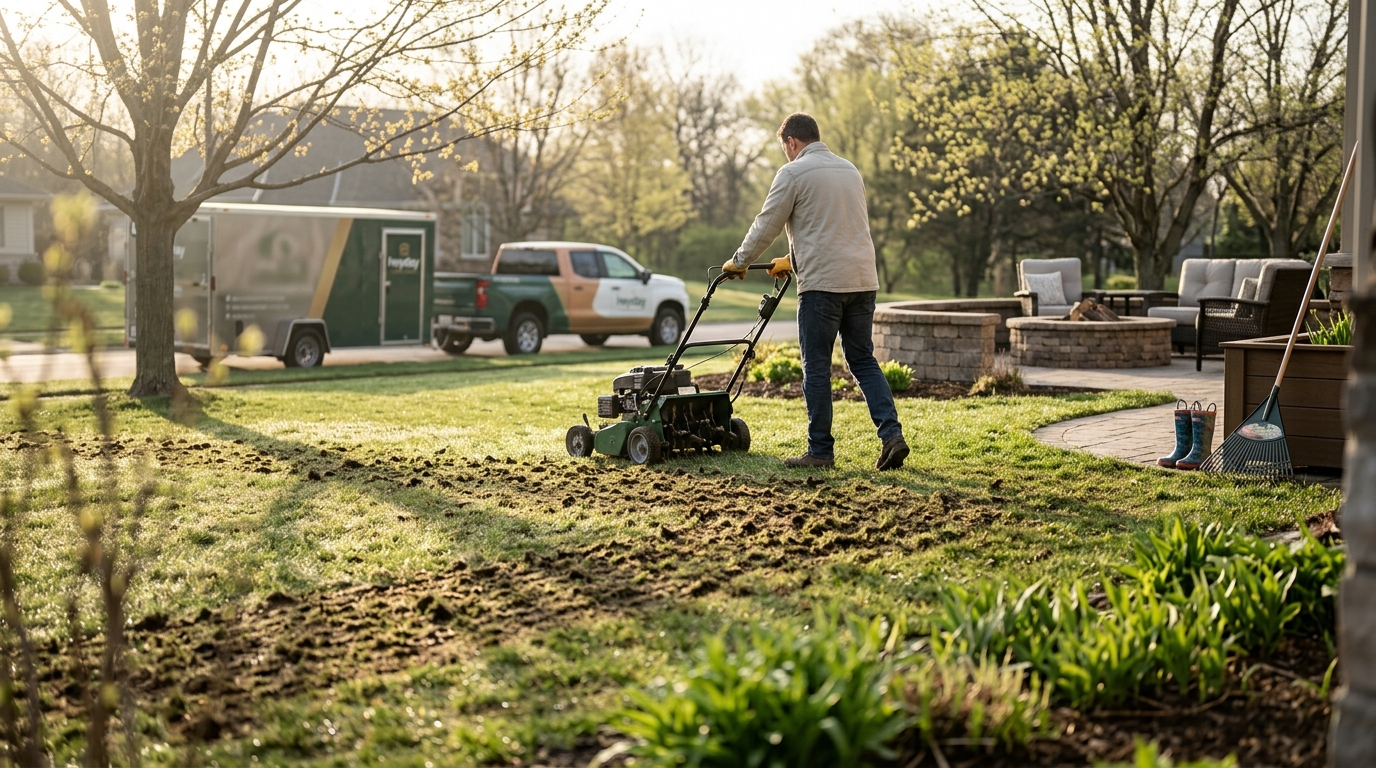
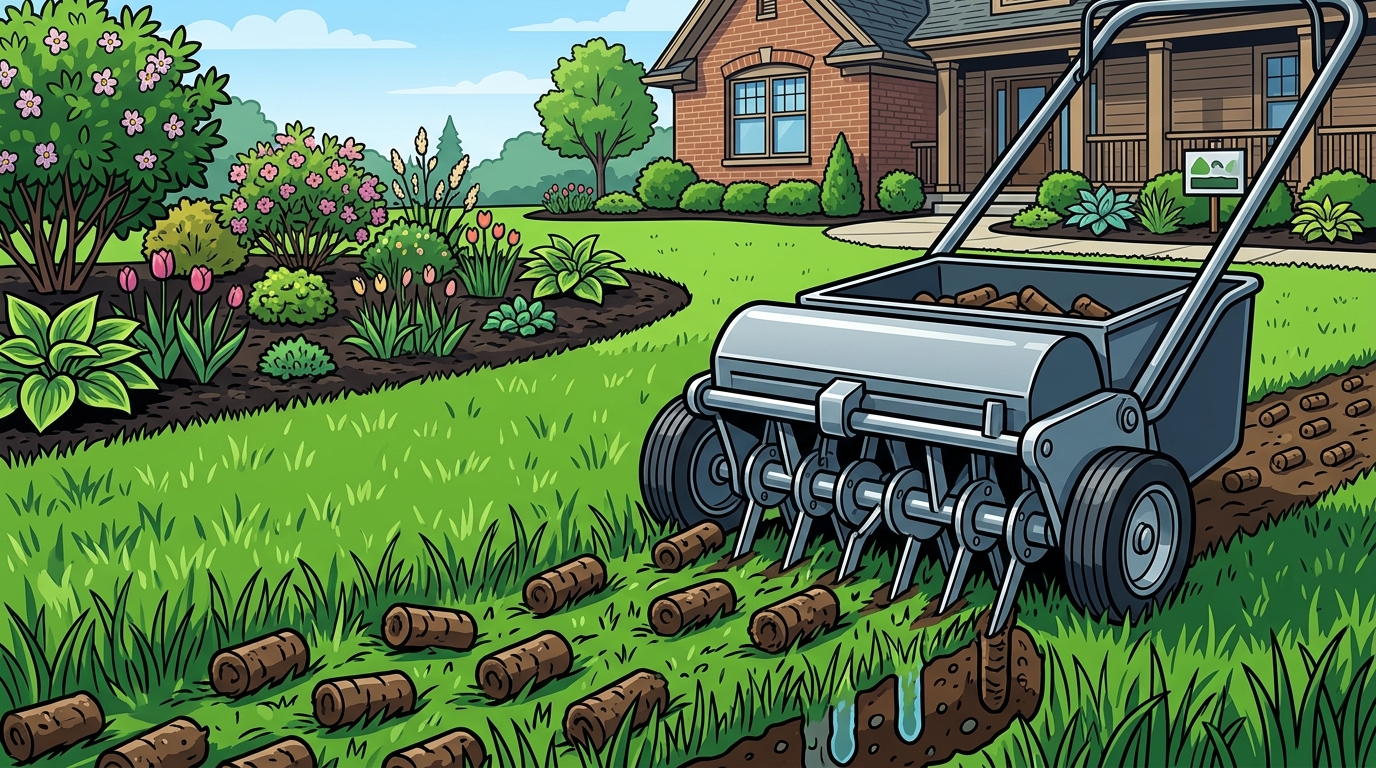
Core aeration involves pulling small plugs of soil from the lawn. These plugs will break down over a few weeks, returning beneficial microbes to the surface. This process is best performed in early spring, just as the grass begins its active growth phase. The holes created allow water to penetrate deeper, encouraging roots to grow downward rather than spreading horizontally. (Spring Lawn Care)
According to landscape industry benchmarks, aeration improves soil structure and enhances the effectiveness of subsequent fertilization. At Heyday Landscaping, we utilize commercial-grade aerators that ensure consistent depth and spacing. You can explore our Landscape Services to see how professional aeration fits into a comprehensive care plan.
Step 4: Strategic Fertilization Timing
Fertilizing in spring is critical, but the type of fertilizer matters. You need a balanced, slow-release nitrogen formula to support steady growth without causing rapid, weak shoots that are susceptible to disease. Fast-release fertilizers can burn the grass if applied during a dry spell or if over-applied.
In Eastern Iowa, the ideal window for spring fertilization is typically late April to early May, depending on soil temperature. The soil should consistently reach 55 degrees Fahrenheit for cool-season grasses to begin active growth. Applying fertilizer too early, while the ground is still frozen or cold, results in nutrient runoff into local waterways, which is both environmentally harmful and a waste of money.
Consider soil testing to determine exact nutrient deficiencies. Many local extension services offer affordable soil analysis. This data allows for precise amendment recommendations. For more insights on seasonal care, read our article on The Outdoor Life blog, which covers seasonal transitions in detail.
Step 5: Overseeding and Soil Amendment
Overseeding is the process of spreading new grass seed over an existing lawn. This is essential for thickening the turf and introducing disease-resistant varieties. In Eastern Iowa, Tall Fescue is often recommended for its drought tolerance and deep root system. Kentucky Bluegrass provides the dense, carpet-like appearance many homeowners desire but requires more moisture.
When overseeding, use a spreader to ensure even distribution. Rake the seed lightly into the soil to ensure good seed-to-soil contact. Water the area consistently until germination occurs. This usually takes 7 to 14 days depending on the grass type and weather conditions.
Soil amendment with compost can also be beneficial. Compost adds organic matter, improves water retention, and introduces beneficial microorganisms. This practice aligns with sustainable landscaping principles that are gaining traction in the Midwest. For those interested in sustainable irrigation options, we also recommend exploring Thirsty Earth Temporary Irrigation systems to conserve water during the establishment phase.
Service Comparison: DIY vs. Professional Care
Homeowners often debate whether to tackle spring prep themselves or hire professionals. Both options have merits, but the complexity of Eastern Iowa's climate often tips the scale toward professional intervention for large or problematic lawns.
| Factor | DIY Approach | Professional Service |
|---|---|---|
| Equipment Cost | High (Rental or Purchase) | Included in Service Fee |
| Time Investment | 10-20 Hours per Project | Minimal (Supervision Only) |
| Expertise | Variable | Certified Landscape Knowledge |
| Warranty/Guarantee | None | Performance Guarantees |
| Stress Level | High | Low |
While DIY can save money upfront, the risk of improper timing or technique can lead to poor results. Professional services bring specialized equipment and localized knowledge that DIYers lack. For example, knowing the exact window for aeration in Cedar Rapids versus Iowa City can make a significant difference in outcomes.
Key Takeaways
- Timing is Critical: Wait for soil temperatures to reach 55°F before fertilizing to prevent nutrient runoff.
- Aeration is Essential: Core aeration reverses compaction and improves root depth, a standard practice for Zone 5 lawns.
- Thatch Management: Remove thatch layers over 0.5 inches to prevent disease and improve water penetration.
- Grass Selection: Tall Fescue and Kentucky Bluegrass are the primary cool-season grasses for Eastern Iowa.
- Professional Insight: Local expertise accounts for micro-climates between Cedar Rapids and Iowa City.
- Sustainable Options: Consider temporary irrigation systems like Thirsty Earth to support new seedlings efficiently.
- Early Action: Addressing winter damage in early spring allows for maximum recovery before summer heat stress.
Frequently Asked Questions
When is the best time to aerate a lawn in Eastern Iowa?
The best time is early spring, just as the grass begins to green up and grow actively. This allows the lawn to heal quickly from the aeration process.
How do I know if my lawn needs dethatching?
If you can push a screwdriver into the soil with difficulty, or if the spongy layer between the grass and soil is thicker than half an inch, dethatching is necessary.
Can I overseed my lawn in the fall instead of spring?
Yes, fall is often considered the ideal time for overseeding cool-season grasses because the soil is still warm, and weed competition is lower. However, spring overseeding is viable if done correctly.
What is the difference between core aeration and spike aeration?
Core aeration removes plugs of soil, relieving compaction effectively. Spike aeration merely pokes holes, which can further compact the soil around the holes. Core aeration is the recommended standard.
How much does professional lawn care cost in Cedar Rapids?
Costs vary based on lawn size and specific services required. We offer free consultations to provide accurate estimates tailored to your property's needs.
What plants are best for Zone 5 in Eastern Iowa?
Plants such as catmint, purple coneflower, and pink spirea are excellent choices for low-maintenance, winter-hardy landscaping in this region.
Why is my lawn turning brown in the spring?
Brown patches can result from winter kill, fungal diseases, or drought stress. Proper assessment and timely aeration can help resolve these issues.
Schedule Your Spring Consultation
Do not let another season pass with a lackluster lawn. Eastern Iowa's climate demands precision and expertise to achieve a vibrant, healthy yard. Heyday Landscaping has been serving Cedar Rapids, Iowa City, and the surrounding areas since 1991. We understand the unique challenges of the region and provide tailored solutions for every property.
Contact us today to schedule your free consultation. Let us help you transform your outdoor space into a retreat you never want to leave. From landscape design to paver patios and retaining walls, we build the foundation for your outdoor enjoyment.