
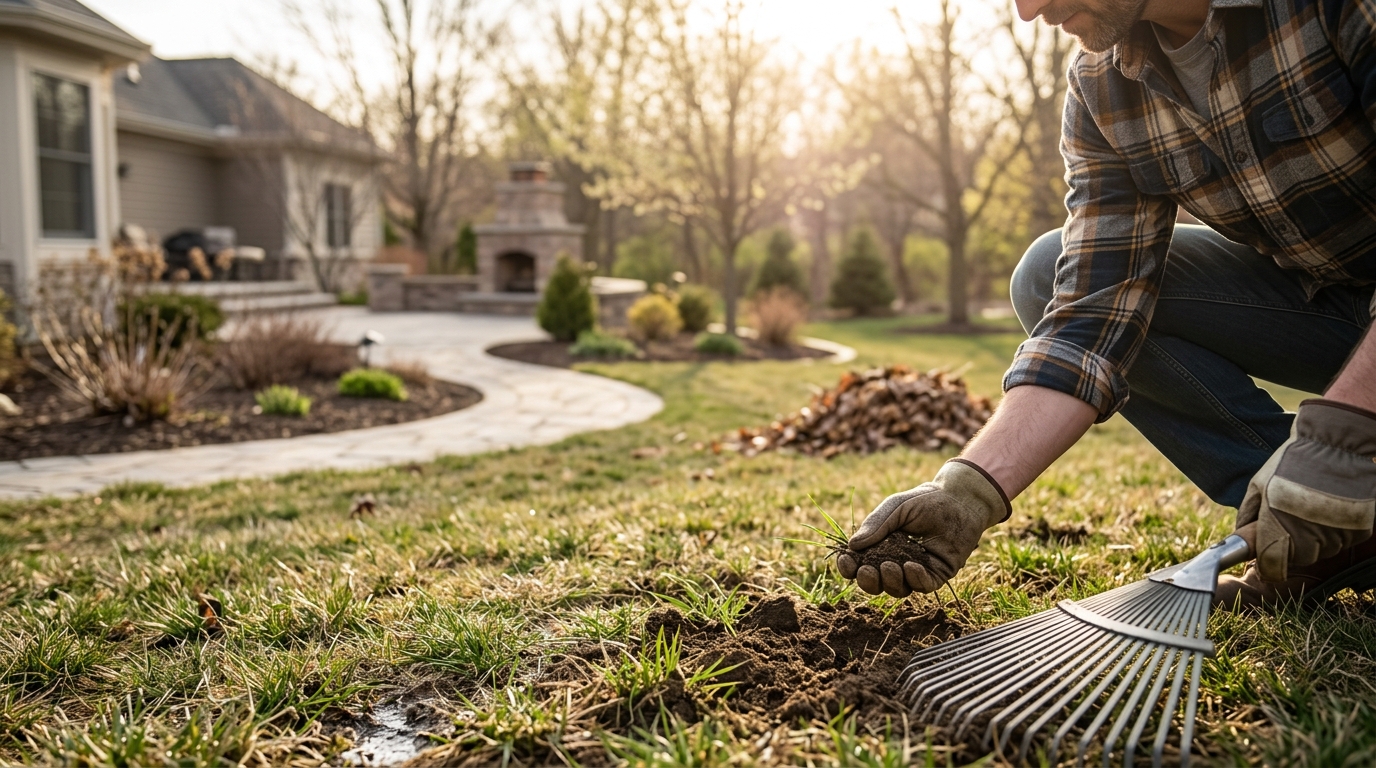
Eastern Iowa homeowners face a unique challenge every spring. The transition from harsh winters to the growing season is not just about waiting for the snow to melt. It is about aggressive intervention. According to recent regional horticultural data, lawns in Zone 5 that skip early spring maintenance suffer a 30% reduction in summer drought resilience compared to those that receive proper aeration and soil amendment. This is not a suggestion. It is a biological necessity for cool-season grasses like Kentucky bluegrass and fescue, which dominate the Cedar Rapids and Iowa City landscapes. If you want a yard that survives the July heat, you must act before the grass fully greens up. This guide outlines the precise, professional steps required to transform a dormant, damaged winter lawn into a thriving, dense turf. We will cover everything from debris removal to the critical timing of your first fertilizer application. Let us get to work. (Products ndash Heyday Landscaping)
Step 1: Clear Winter Debris and Thatch
The first week of March in Eastern Iowa is often still cold. However, you must not wait for perfect weather to start cleanup. Winter leaves, broken branches, and sediment from snowmelt create a suffocating layer over your turf. This debris blocks sunlight and traps moisture, leading to fungal diseases like snow mold. Remove all physical debris immediately. Do not use a leaf blower to push debris into the flower beds. That simply moves the problem. Rake or use a heavy-duty mower with a bagging attachment to collect the material.
While you are raking, inspect the thatch layer. Thatch is the layer of dead grass stems and roots that sits between the green vegetation and the soil. A thatch layer less than half an inch thick is normal. If it is thicker, your grass cannot breathe. Water and fertilizer will run off the surface rather than penetrating the soil. In Eastern Iowa, heavy clay soils accelerate thatch buildup. If your thatch is excessive, consider dethatching or hiring professionals for landscape design services that include soil remediation. Removing this barrier is the foundation of all subsequent lawn care steps.
Step 2: Core Aeration for Compacted Soil
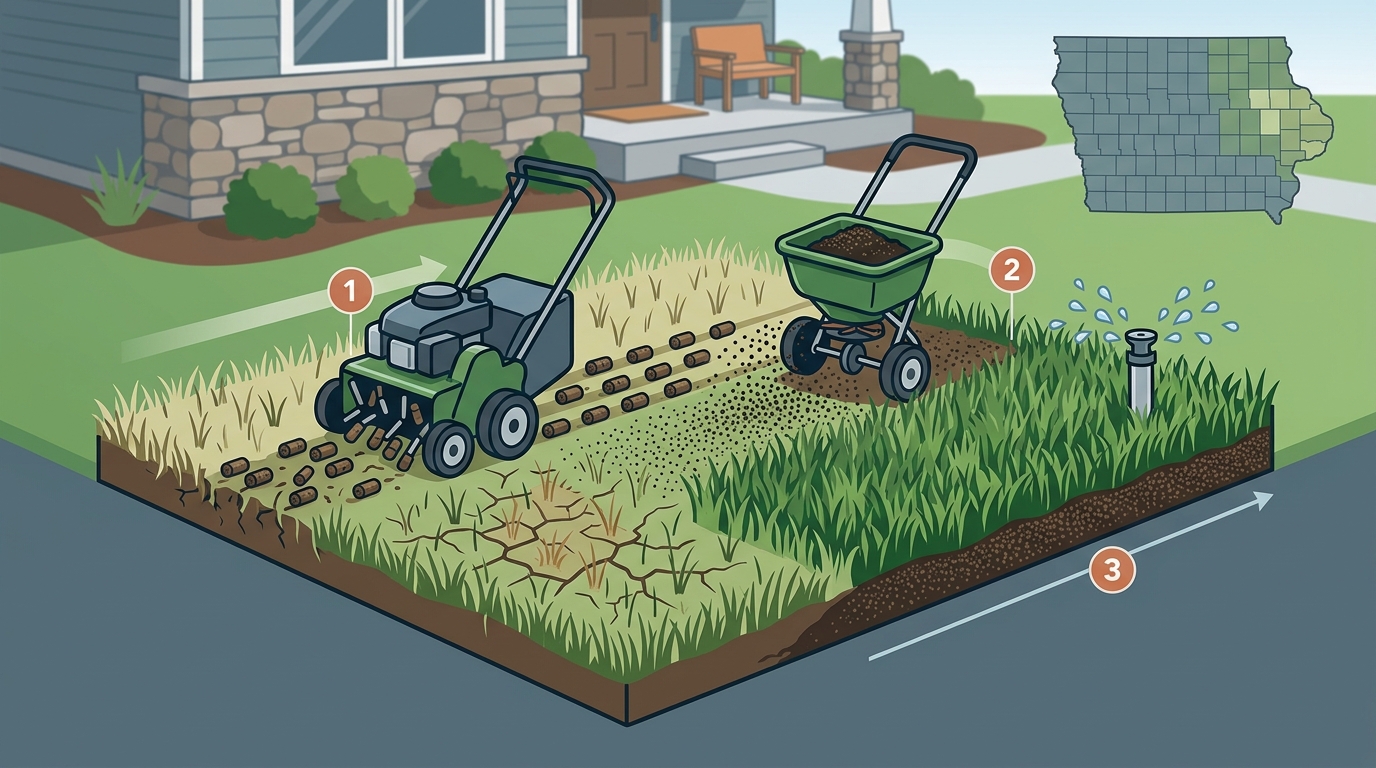
Clay soil is the defining characteristic of the Cedar Rapids and Iowa City region. It is fertile, but it is also dense. Winter foot traffic, snow plows, and frozen ground create severe compaction. Compacted soil has no air pockets. Grass roots cannot penetrate it. They suffocate and die. Core aeration is the only effective way to reverse this. The process involves pulling small plugs of soil and thatch from the lawn, leaving holes that allow air, water, and nutrients to reach the root zone.
Timing is critical. You must aerate when the soil is moist but not saturated. If the soil is too wet, you will create ruts and further compaction. If it is too dry, the aerator tines will not penetrate deeply enough. Aim for early to mid-April. The plugs will break down naturally within two weeks, returning beneficial microbes to the surface. This process dramatically improves the efficacy of your subsequent fertilizer and overseeding efforts. For homeowners in Marion or North Liberty dealing with severe compaction, professional paver patio installation often requires similar soil preparation techniques to ensure stability.
Step 3: Conduct a Professional Soil Test
Guessing your soil needs is a recipe for failure. Before you buy a single bag of fertilizer, you must know the chemical composition of your ground. Soil pH dictates nutrient availability. In Eastern Iowa, soils tend to be slightly acidic. If your pH is too low, your grass cannot absorb iron or manganese, leading to yellowing and stunted growth. A soil test reveals your exact pH level and nutrient deficiencies.
You can purchase a home test kit, but professional analysis is more accurate. Many local extension offices in Iowa offer this service. The test will tell you if you need lime to raise pH or specific amounts of nitrogen, phosphorus, and potassium. This data-driven approach prevents over-fertilization, which can burn the grass and pollute local waterways. Understanding your soil profile is the difference between a guess and a strategic outdoor plan. Use the results to guide your next step precisely.
Step 4: Apply Early Spring Fertilizer
Once you have your soil test results, you can select the correct fertilizer. Early spring fertilization serves two purposes. It provides a quick nitrogen boost to jumpstart green-up. It also builds root reserves for the summer. However, you must avoid high-nitrogen, fast-release fertilizers in early spring. They force the grass to grow too quickly, which makes it susceptible to disease and pests. Instead, look for a balanced, slow-release formula.
The goal is steady, consistent growth, not a rapid green surge. Apply the fertilizer when the soil temperature consistently reaches 55 degrees Fahrenheit. This is usually late April in Eastern Iowa. Water the lawn lightly after application to activate the granules. This step fuels the grass for the upcoming growing season. It also prepares the turf to handle the stress of summer heat. Proper fertilization is a key component of any comprehensive retaining wall and hardscaping maintenance strategy, ensuring the surrounding turf remains healthy.
Step 5: Overseed Thin or Bare Patches
Winter kill is real. In Eastern Iowa, ice sheets and freeze-thaw cycles can destroy large sections of turf. These bare patches are invitation cards for weeds. Crabgrass and dandelions will colonize these areas immediately if left empty. Overseeding fills these gaps with dense, healthy grass that crowds out weeds naturally. This is the most effective weed control method available to homeowners.
Choose a seed mix appropriate for your specific light conditions and soil type. For full sun areas in Cedar Rapids, a Kentucky bluegrass blend works well. For shady spots under mature oaks, use a fescue mix. Spread the seed evenly using a broadcast spreader. Rake the seed lightly into the soil to ensure good seed-to-soil contact. Keep the area consistently moist until the seeds germinate. This process transforms a patchy, weak lawn into a thick, resilient carpet. It is also a critical step before installing new outdoor kitchens, as a healthy base prevents settling issues.
Step 6: The First Mow and Blade Height
Homeowners often make the mistake of mowing too early or too short. The first mow of the year should only happen when the grass is dry. Mowing wet grass tears the blades and spreads fungal spores. Set your mower blade high. Do not cut more than one-third of the grass height at any single time. For cool-season grasses, start at 3 to 3.5 inches. Taller grass shades the soil, reducing weed germination and retaining moisture.
This high-cut strategy encourages deep root growth. Deep roots are your best defense against drought. As the summer approaches, you can raise the blade even higher. Never scalp your lawn. Scalping removes the plant's energy reserves and exposes the crown to sunlight damage. A gradual transition in mowing height throughout the spring protects the grass structure. This discipline is part of the ongoing snow removal and seasonal maintenance cycle that keeps Eastern Iowa properties pristine.
Step 7: Inspect Irrigation and Drainage
Before the heat of summer arrives, your irrigation system must be operational. Winter freezes can crack pipes and damage sprinkler heads. Turn on your system zone by zone. Look for geysers, misting, or dry spots. Repair any broken heads immediately. A malfunctioning sprinkler wastes water and creates muddy patches that attract pests.
Equally important is surface drainage. Winter snowmelt often reveals low spots in your yard where water pools. Standing water kills grass roots. If you have significant drainage issues, consider installing a French drain or regrading the landscape. Proper drainage is essential for the longevity of any pool or hardscape installation. Ensuring your lawn drains correctly protects your entire outdoor investment. This final step ensures your lawn is ready for the demands of the growing season.
Key Takeaways
- Timing is Critical: Aerate and overseed in early to mid-April when soil is moist but not saturated.
- Soil Health First: Always conduct a soil test before applying fertilizer to avoid nutrient imbalances.
- Aeration is Non-Negotiable: Core aeration reverses clay soil compaction, allowing roots to breathe.
- High Mowing: Start the season with blades set to 3-3.5 inches to promote deep root growth.
- Overseeding Prevents Weeds: Dense turf is the best defense against crabgrass and dandelions.
- Debris Removal: Clear thatch and winter debris immediately to prevent fungal diseases.
- Slow-Release Fertilizer: Use slow-release nitrogen to avoid rapid, disease-prone growth.
Frequently Asked Questions
When is the best time to aerate my lawn in Eastern Iowa?
The optimal window is early to mid-April. You must wait until the soil has thawed completely and is moist. Aeration is ineffective if the ground is frozen or if it is too wet, which causes compaction.
Do I need to fertilize my lawn in early spring?
Yes, but use a slow-release fertilizer. Fast-release fertilizers can burn the grass and promote weak growth. A soil test will tell you exactly what nutrients your lawn needs.
How tall should I set my mower for the first cut?
Set your mower blade to 3 to 3.5 inches. Cutting too short stresses the grass and exposes the soil to weed seeds. Taller grass retains moisture better during summer.
What is the difference between dethatching and aeration?
Dethatching removes the layer of dead organic matter on the surface. Aeration pulls plugs of soil from beneath the surface. Both are important, but aeration is more critical for clay soils.
How do I fix bare patches from winter kill?
Overseed the area with the appropriate grass seed for your light conditions. Keep the soil moist until germination. This fills the gaps and prevents weed colonization.
Should I install a new irrigation system in the spring?
Spring is a good time to inspect and repair existing systems. New installations are often better scheduled for late spring or early summer to avoid interfering with lawn prep.
Ready to Transform Your Yard?
Spring lawn preparation is the foundation of a beautiful outdoor space. However, it is only the beginning. If you are ready to take your yard to the next level, consider expanding your outdoor living areas. Whether you need a new paver patio, a functional outdoor kitchen, or a complete landscape design, Heyday Landscaping is here to help. We serve Cedar Rapids, Iowa City, and all of Eastern Iowa. Contact us today to schedule your free consultation and start building the backyard you deserve.