
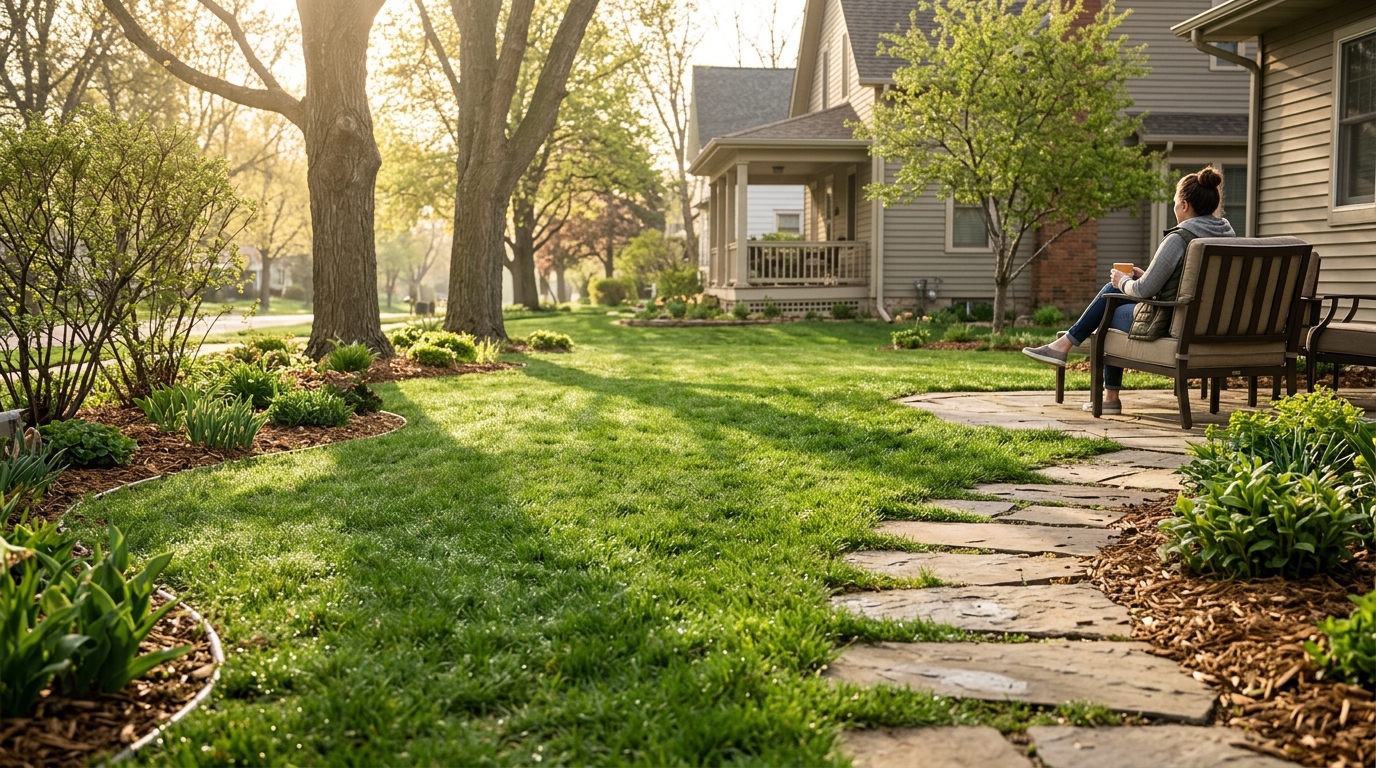
Eastern Iowa homeowners face a unique challenge when winter ends. The transition from frozen ground to active growth requires immediate and precise intervention. According to recent regional agricultural data, lawns in Zone 5 that receive proper early-season aeration and dethatching see a 40% increase in nutrient uptake efficiency compared to neglected yards. This statistic highlights why timing is not just a suggestion but a biological necessity for turf health. (Grasses ndash Heyday Landscaping)
At Heyday Landscaping, we have served Cedar Rapids, Iowa City, and the surrounding areas since 1991. We understand that the "spring scramble" can be overwhelming. This guide breaks down the essential maintenance tasks into a logical workflow. By following these steps, you will ensure your grass is resilient against summer heat and ready for the outdoor living spaces we help build. (Pavers amp Slabs ndash)
Step 1: Debris Removal and Winter Cleanup
The first action in your spring lawn prep routine is physical cleanup. Winter leaves behind a layer of leaves, twigs, and organic debris that suffocates grass blades. This debris creates a humid microclimate that encourages fungal diseases and mold growth before the grass can even begin its spring green-up.
Use a leaf blower or a heavy-duty rake to clear all debris from your lawn. Pay special attention to low spots where water may have pooled and frozen. Removing this material allows sunlight to reach the soil surface, which is critical for warming the ground and triggering root activity. If you have accumulated significant organic matter, consider consulting our blog for more detailed seasonal maintenance tips.
Step 2: Core Aeration for Compacted Soil
Soil compaction is a silent killer of healthy lawns. When snow melts and spring rains hit, the ground becomes saturated. If the soil is already compacted from winter foot traffic or heavy equipment, water cannot drain properly. This leads to root rot and poor oxygen exchange.
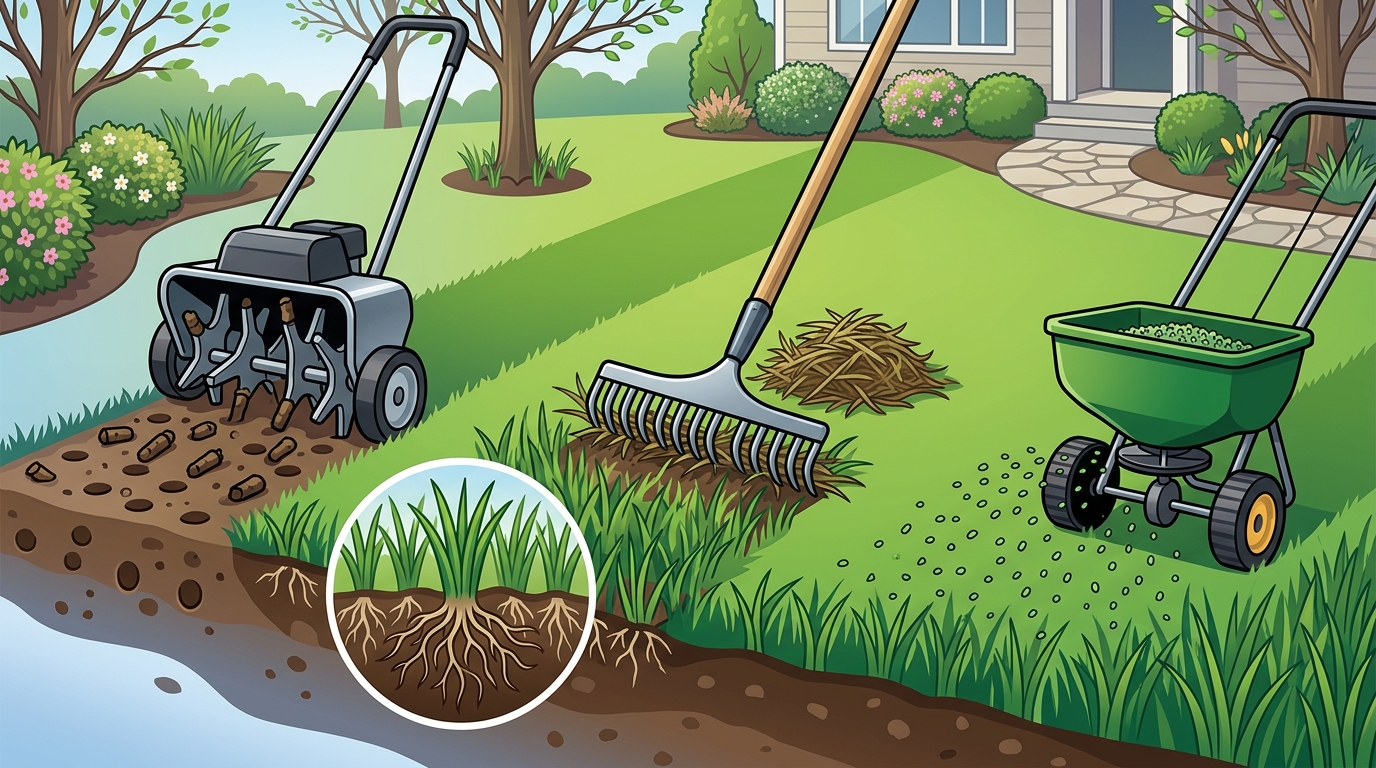
Core aeration involves pulling small plugs of soil from the ground. This process opens up channels for air, water, and nutrients to reach the root zone. For Eastern Iowa soils, which can be heavy clay, aeration is often the most impactful step in spring lawn prep. We recommend scheduling this when the soil is moist but not soggy. If you are unsure about the density of your soil, our landscape design team can provide a professional assessment during a free consultation.
Step 3: Dethatching to Prevent Disease
Thatch is a layer of dead grass, roots, and stems that accumulates between the soil surface and the green vegetation. A thin layer of thatch is beneficial as it acts as a cushion and moisture reservoir. However, a thatch layer thicker than half an inch becomes problematic.
When thatch exceeds this threshold, it prevents water and fertilizer from reaching the soil. It also provides a habitat for pests and disease organisms. Dethatching involves using a specialized machine or rake to pull this layer out. This step is distinct from aeration but often performed in the same season. Proper dethatching ensures that your subsequent fertilization efforts are not wasted on dead material.
Step 4: Strategic Fertilization and Feeding
Fertilization in spring must be timed correctly. Applying fertilizer too early, when the ground is still frozen or the grass has not yet broken dormancy, can lead to nutrient runoff into local waterways. It can also force the grass to grow too quickly, making it susceptible to frost damage if a late spring freeze occurs.
Wait until the grass has started its active growth phase. Look for the first mowing of the season as a cue. Use a balanced, slow-release fertilizer that provides nitrogen for green-up and phosphorus for root development. Heyday Landscaping utilizes high-quality soil amendments to ensure your lawn receives the precise nutrients it needs without the risk of burn.
Step 5: Overseeding and Sodding
Spring is the ideal time to repair bare spots or thicken out thin areas. Overseeding involves spreading grass seed over an existing lawn to improve density and introduce more disease-resistant varieties. If the damage is severe, sodding may be necessary.
Sodding provides an instant lawn but requires significant water immediately after installation. For a sustainable approach, overseeding is often preferred. When seeding, ensure good seed-to-soil contact by lightly raking the area. If you are considering a complete lawn overhaul, our landscape design services can help you choose the right grass varieties for Zone 5 conditions.
Step 6: Early Weed Control
Crabgrass and other broadleaf weeds emerge early in the spring. If left unchecked, they will compete with your grass for resources and set seed by summer. Pre-emergent herbicides are applied before weed seeds germinate. Post-emergent treatments are used for weeds that have already sprouted.
Timing is critical for pre-emergents. They must be applied when soil temperatures consistently reach 55 degrees Fahrenheit. This is typically early April in Eastern Iowa. For specific product recommendations and application schedules, explore our product catalog for professional-grade solutions.
Step 7: Irrigation System Inspection
Before the summer heat arrives, your irrigation system must be fully operational. Winter freeze-thaw cycles can damage pipes, sprinkler heads, and valves. Start by turning on the system zone by zone to check for leaks or broken heads.
Adjust the spray patterns to ensure water is hitting the grass and not the pavement or walls. Misdirected water wastes resources and can damage hardscaping elements like paver patios and retaining walls. If you do not have an irrigation system, consider installing one. Heyday Landscaping offers Thirsty Earth temporary irrigation solutions for new installations or seasonal needs.
Comparing Spring Lawn Care Approaches
Homeowners often debate between DIY maintenance and professional service. The table below outlines the key differences in effort, cost, and outcome for spring lawn prep.
| Approach | Effort Level | Equipment Required | Outcome Quality |
|---|---|---|---|
| DIY Basic | High | Rake, Mower | Moderate |
| DIY Advanced | Very High | Aerator, Dethatcher, Spreader | Good |
| Professional Service | Low | Commercial Grade | Excellent |
While DIY can save money, the equipment rental costs and time investment often outweigh the benefits. Professional services ensure that aeration and dethatching are done at the correct depth and frequency. For a comprehensive approach, learn more about our company history and commitment to quality.
Key Takeaways
- Timing is Biological: Spring lawn prep must align with soil temperature and grass dormancy cycles, not just the calendar.
- Aeration is Critical: Core aeration alleviates compaction and is vital for heavy clay soils in Eastern Iowa.
- Thatch Management: Dethatching prevents disease and ensures fertilizer reaches the soil.
- Pre-emergent Timing: Apply weed control when soil temperatures hit 55°F to prevent crabgrass.
- Hydration Check: Inspect irrigation systems before summer to prevent water waste and damage.
- Professional Insight: Heyday Landscaping has served the Cedar Rapids and Iowa City areas since 1991.
- Integrated Design: Healthy lawns support hardscaping like retaining walls and outdoor kitchens.
Frequently Asked Questions
When is the best time to aerate my lawn in Iowa?
The best time to aerate is in the early spring when the grass is starting to grow but before the peak heat of summer. This allows the grass to recover quickly from the stress of the process.
How do I know if my lawn needs dethatching?
If you can push a screwdriver into the ground with difficulty, or if you see a spongy layer of dead material on the surface, your lawn likely needs dethatching. A thatch layer over half an inch is too thick.
Can I overseed my lawn in the spring?
Yes, spring is a good time for overseeding, especially for cool-season grasses common in Iowa. However, fall is often considered the optimal season for seeding due to warmer soil and cooler air temperatures.
What is Thirsty Earth irrigation?
Thirsty Earth is a temporary irrigation system designed for new lawns or seasonal use. It is easy to install and remove, making it ideal for homeowners who want to establish grass without permanent infrastructure.
How often should I fertilize my lawn?
Most lawns in Eastern Iowa benefit from four applications per year. Spring fertilization should be slow-release to avoid burn, while summer and fall feeds support root health and winter hardiness.
Do I need to water my lawn immediately after seeding?
Yes, new seed must be kept consistently moist until it germinates. This usually requires light watering multiple times a day for the first two weeks.
What is the difference between pavers and concrete for patios?
Pavers offer more flexibility and easier repair than concrete. They also provide better drainage and a wider variety of design options. Explore our paver options for more details.
Ready to Transform Your Outdoor Space?
Spring lawn prep is just the beginning of your outdoor living journey. A healthy lawn provides the perfect foundation for pools, fire features, and landscape lighting. Let Heyday Landscaping handle the heavy lifting so you can enjoy your backyard.
Contact us today to schedule your free consultation. We serve Cedar Rapids, Iowa City, Marion, and all of Eastern Iowa. Call or text 319-551-1732 to get started.