
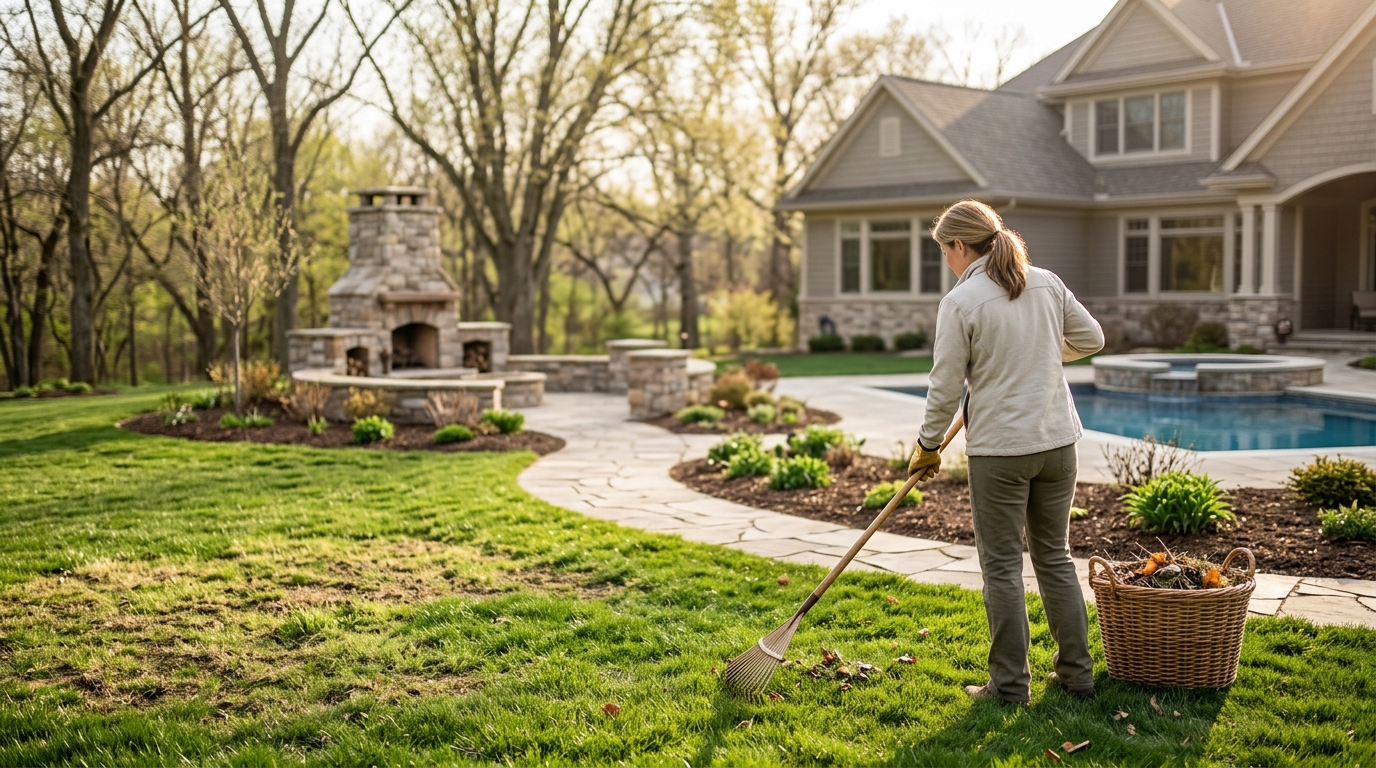
Eastern Iowa residents face a unique challenge when the snow melts. The transition from a frozen, dormant landscape to a vibrant green yard requires strategic intervention. According to recent agricultural data, proper spring lawn care can increase turf density by up to 40% compared to neglected lawns. This guide outlines the exact steps to transform your yard from a winter wreck into a thriving retreat. We will cover everything from debris removal to irrigation setup, ensuring your outdoor space is ready for the season. (Products ndash Heyday Landscaping)
Step 1: Clear Debris and Aerate the Soil
The first action in your spring lawn prep routine is removing winter debris. Leaves, branches, and mulch piles can suffocate grass blades and promote fungal growth. Clearing this material allows sunlight and air to reach the soil surface. Once the debris is gone, you must address soil compaction. Iowa soils often become dense after months of freeze-thaw cycles.
Aeration is the process of pulling small plugs of soil from the ground. This creates channels for water, oxygen, and nutrients to penetrate deep into the root zone. Without aeration, fertilizer runs off the surface rather than feeding the roots. Professional equipment ensures uniform depth, which is critical for effective recovery. If you are unsure about the timing, wait until the grass is actively growing and the soil is moist but not soggy.
Step 2: Mow High and Keep Blades Sharp
Many homeowners make the mistake of mowing too low in the spring. This practice, known as scalping, stresses the grass and exposes the crown to temperature fluctuations. Set your mower deck to a higher setting, typically between 3 and 4 inches. Taller grass shades the soil, which reduces weed germination and retains moisture during hot summer days.
Sharp mower blades are equally important. Dull blades tear the grass tips rather than cutting them cleanly. This tearing creates open wounds that are susceptible to disease. A clean cut allows the grass to heal quickly and promotes a uniform green appearance. If your mower struggles to cut through the winter mat, sharpen the blades before your first pass.
Step 3: Address Drainage Issues
Spring in Eastern Iowa often brings heavy rains. If your lawn has low spots or standing water, you must address drainage before the growing season peaks. Standing water drowns grass roots and creates ideal conditions for moss and algae. Professional water drainage solutions can redirect runoff away from your foundation and lawn.
For minor issues, you can create shallow swales or add topsoil to low areas. However, significant drainage problems require engineered solutions. This might include French drains, catch basins, or grading adjustments. Proper drainage protects your investment and ensures the soil remains aerated. Ignoring these issues can lead to permanent damage to your turf and landscape structure.
Step 4: Fertilize Strategically
Fertilization is not a one-size-fits-all process. The goal of spring fertilization is to support root development and early green-up. Use a balanced fertilizer with a higher nitrogen content to stimulate growth. However, avoid over-fertilizing, which can lead to excessive top growth and weak roots.
Timing is critical. Apply fertilizer when the soil temperature reaches 55 degrees Fahrenheit. This ensures the grass can absorb the nutrients efficiently. Consider a slow-release formula to provide steady feeding throughout the season. This approach reduces the risk of burn and minimizes the need for frequent applications. Always follow local regulations regarding fertilizer runoff to protect nearby waterways.
Step 5: Overseed Bare Patches
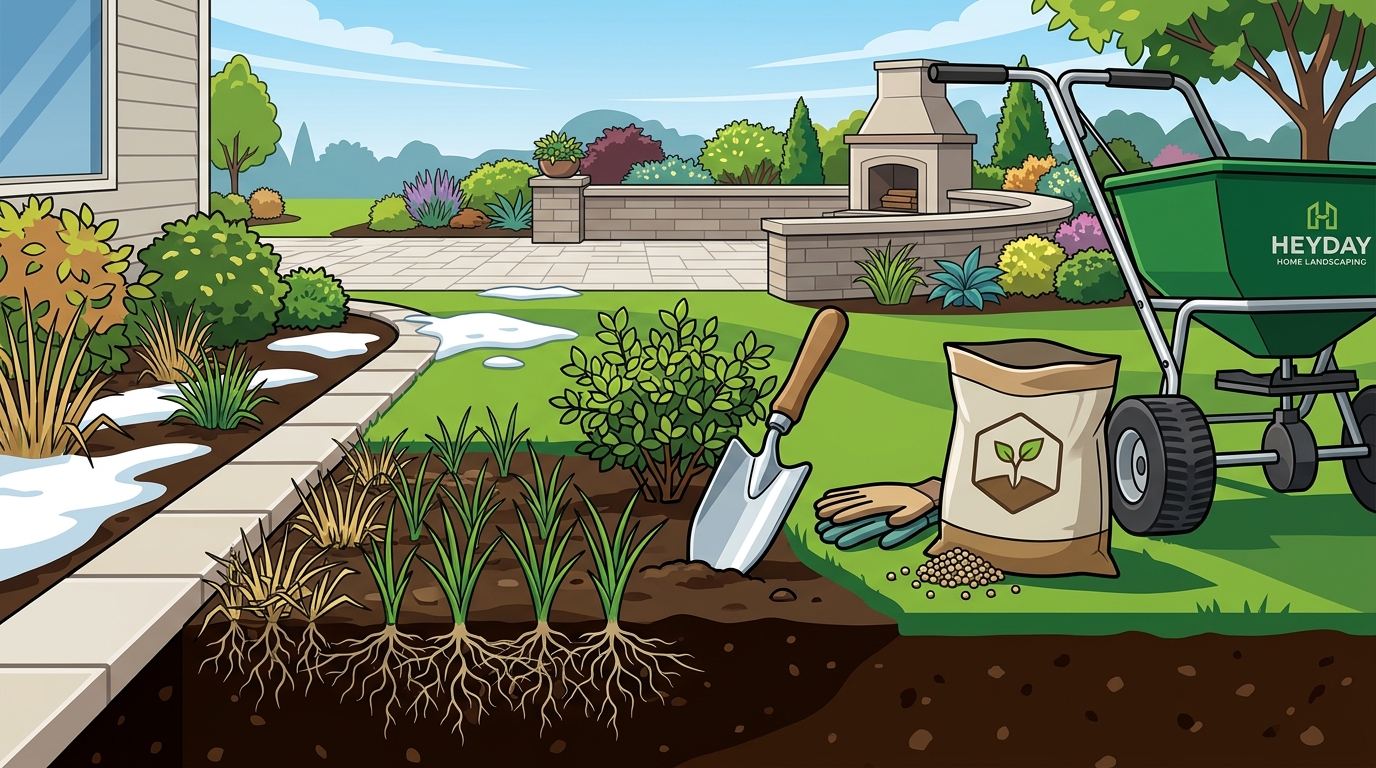
Winter damage often leaves bare patches or thin areas in the lawn. Overseeding is the most effective way to fill these gaps and improve overall turf density. Choose a grass seed blend that matches your existing lawn and shade conditions. For Eastern Iowa, cool-season grasses like Kentucky bluegrass, fescue, and ryegrass are standard choices.
Prepare the soil by raking the bare areas to create a loose seedbed. Spread the seed evenly and lightly rake it into the soil. Keep the area consistently moist until the seeds germinate. This process can take anywhere from 7 to 21 days depending on the species. A dense lawn is the best defense against weeds and pests.
Step 6: Install Temporary Irrigation
As the weather warms, consistent watering becomes essential. Traditional sprinkler systems may not provide the flexibility needed for new seed or established turf during dry spells. Thirsty Earth temporary irrigation offers a modular solution that adapts to your lawn's specific needs. This system allows you to place water directly where it is needed without digging trenches.
Proper irrigation ensures that your grass does not go into shock during heatwaves. It also helps establish deep roots, which makes the lawn more drought-resistant. Check your system regularly for leaks or clogs. Adjust the watering schedule based on rainfall and temperature. Overwatering is just as harmful as underwatering, so monitor soil moisture levels closely.
Step 7: Plan Hardscape Upgrades
While your lawn recovers, consider enhancing your outdoor living space. Hardscape elements like patios, retaining walls, and fire features add value and functionality to your property. Paver patios and pathways provide durable surfaces that withstand heavy foot traffic and weather changes.
Retaining walls can solve erosion problems while adding visual interest to sloped yards. They create level areas for planting or seating. Outdoor kitchens extend your living space into the garden, making entertaining easier. Planning these upgrades in spring allows ample time for installation before the peak summer season. Professional design ensures that these elements integrate seamlessly with your landscape.
Comparison of Spring Lawn Care Approaches
| Approach | Cost Level | Effort Required | Best For |
|---|---|---|---|
| DIY Maintenance | Low | High | Small lawns with minor issues |
| Professional Aeration | Medium | Low | Compacted soil and thick thatch |
| Drainage Installation | High | Low | Significant water pooling issues |
| Hardscape Integration | Very High | None | Major outdoor living upgrades |
Key Takeaways
- Timing Matters: Wait for soil temperatures to reach 55 degrees before fertilizing to ensure nutrient absorption.
- Mow High: Keep grass blades at 3 to 4 inches to shade soil and reduce weed growth.
- Aerate First: Relieve soil compaction to allow water and air to reach the root zone.
- Address Drainage: Fix standing water immediately to prevent root rot and moss growth.
- Use Quality Seed: Choose cool-season blends suited for Eastern Iowa's climate for best results.
- Consider Irrigation: Temporary systems like Thirsty Earth offer flexibility for new and established turf.
- Plan Hardscape: Start designing patios and walls in spring to enjoy them all summer.
Frequently Asked Questions
When is the best time to aerate my lawn in Iowa?
The best time to aerate is in early spring when the grass is actively growing and the soil is moist. This allows the plugs to break down quickly and the grass to recover rapidly.
How often should I fertilize my lawn in the spring?
Typically, one application of slow-release fertilizer in early spring is sufficient. A second application in late spring may be needed if the grass shows signs of nutrient deficiency.
What is the difference between overseeding and sodding?
Overseeding involves spreading grass seed over existing turf to fill thin areas. Sodding involves laying down pre-grown grass rolls. Overseeding is more cost-effective, while sodding provides instant results.
Can I install a paver patio in the spring?
Yes, spring is an excellent time to install paver patios. The ground is thawed and workable, allowing for proper base preparation and installation before the summer heat.
How do I fix drainage issues in my yard?
Minor drainage issues can be fixed with grading or swales. Major issues require professional installation of French drains or catch basins to redirect water away from your property.
What is Thirsty Earth irrigation?
Thirsty Earth is a modular, temporary irrigation system that allows you to place water directly where it is needed without permanent piping. It is ideal for new lawns and garden beds.
Why is my lawn turning yellow in the spring?
Yellowing can be caused by nutrient deficiency, poor drainage, or fungal disease. Aeration and proper fertilization often resolve nutrient-related yellowing. Persistent issues may require professional diagnosis.
Ready to Transform Your Yard?
Spring is the perfect time to invest in your outdoor space. Whether you need simple lawn care or a complete landscape transformation, Heyday Landscaping is here to help. We serve Cedar Rapids, Iowa City, and Eastern Iowa with expert craftsmanship and thoughtful design. Contact us today to schedule your free consultation and start building the backyard you have always dreamed of.