
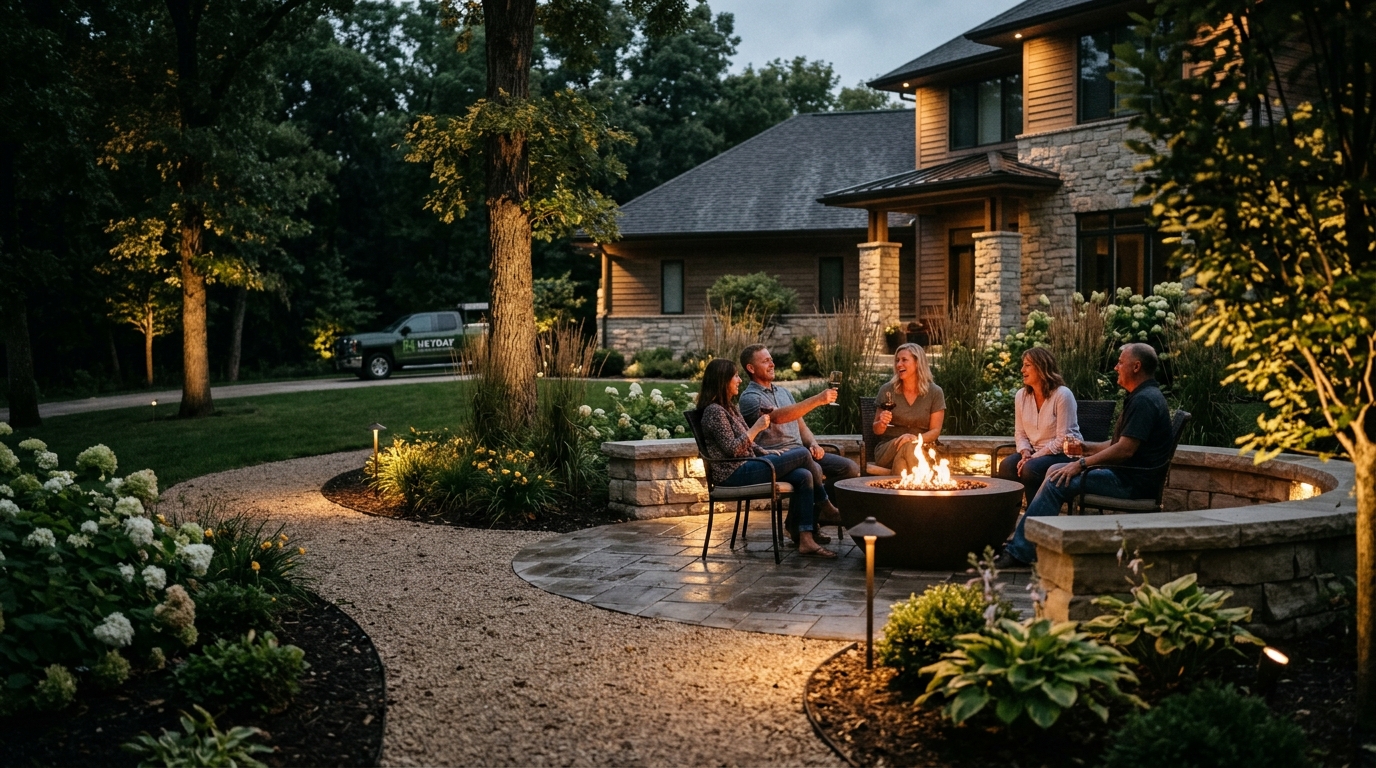
Professional landscape lighting transforms a standard yard into a secure, functional, and visually stunning extension of your home. According to the Illuminating Engineering Society, proper outdoor lighting can reduce tripping hazards by up to 80% while significantly increasing a property's curb appeal. At Heyday Landscaping, we have served Cedar Rapids, Iowa City, and Eastern Iowa since 1991, bringing decades of expertise to every project. We do not simply string lights; we engineer a system that enhances your landscape's architecture while ensuring safety and longevity through the harsh Midwest winters. (Products ndash Heyday Landscaping)
Phase 1: Design and 3D Visualization
The foundation of any successful lighting project is a meticulous design plan. We begin by evaluating your home's architecture, landscape features, and your personal lifestyle needs. This is not a one-size-fits-all approach. We identify key focal points such as mature trees, paver patios, retaining walls, and architectural details that require accentuation.
Using advanced 2D and 3D rendering software, we create a visual blueprint of your proposed lighting scheme. This allows you to see exactly how the light will interact with your landscape before we lift a shovel. Landscape Design is critical because it ensures that every fixture serves a purpose, whether it is guiding guests along a pathway or highlighting a specimen plant. This phase eliminates guesswork and ensures the final result aligns with your aesthetic vision.
For more insights on how design impacts outdoor living, explore our Outdoor Edit Blog.
Phase 2: Site Preparation and Trenching
Once the design is approved, we move to the physical preparation of your yard. This phase involves mapping the exact routes for the low-voltage wiring. We use specialized trenching equipment to create narrow, precise channels that minimize disruption to your existing lawn and hardscape. In Eastern Iowa, where soil composition can vary, we ensure that trenches are dug to the correct depth to protect cables from future gardening activities or frost heave.
We also identify the optimal location for the transformer, which is the heart of your lighting system. This unit must be accessible for maintenance yet discreetly placed to maintain the visual integrity of your yard. Typically, we position it near an existing outdoor power source, ensuring it is protected from direct water exposure while remaining within reach of your home's electrical panel.
Phase 3: Wiring and Transformer Setup
Low-voltage landscape lighting operates on a 12-volt system, which is significantly safer than standard 120-volt household wiring. However, it requires careful calculation to prevent voltage drop, which can cause lights at the end of a run to appear dim. We use high-quality, UV-resistant, and waterproof wiring rated for direct burial.
Our technicians splice the wires using waterproof connectors that create a permanent, weather-tight seal. This is crucial for longevity, as moisture is the primary enemy of outdoor electrical systems. We calculate the total wattage of all fixtures to ensure the transformer is not overloaded. Overloading a transformer leads to premature failure and inconsistent lighting performance. We always size the transformer with a 20% buffer to accommodate future additions or minor power fluctuations.
Phase 4: Fixture Placement and Aiming
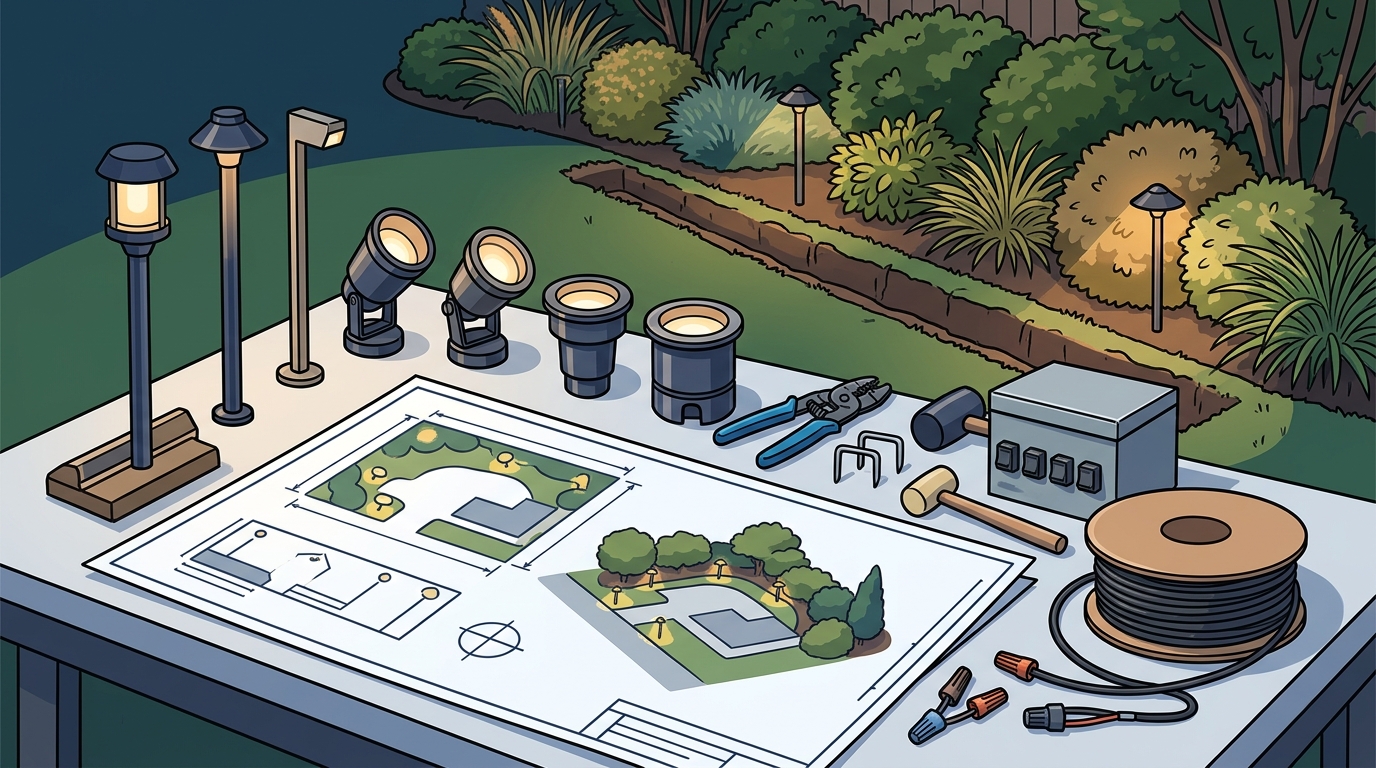
This is where the magic happens. We install the fixtures according to the design plan, but we also adjust for real-time conditions. Landscape Lighting is not just about illumination; it is about shadow, contrast, and texture. We use various fixture types, including uplights for trees, path lights for walkways, and spotlights for architectural features.
Each fixture is carefully aimed to avoid light pollution and glare. For example, uplights are placed at the base of a tree and angled upward to create a natural canopy effect. Path lights are positioned to cast light downward, preventing it from shining into windows or blinding pedestrians. We also consider the color temperature of the bulbs, typically recommending warm white (2700K to 3000K) for a welcoming and natural ambiance that complements the organic tones of Iowa's landscape.
If you are interested in the materials we use, check out our Pavers & Slabs and Fire Pit Kits collections for complementary outdoor elements.
Phase 5: Testing and Fine-Tuning
Before we backfill the trenches and restore your lawn, we conduct a rigorous testing phase. We power on the system and walk the property at dusk to evaluate the light distribution. This is the time to make adjustments. If a light is too bright, we adjust the beam angle or dimmer settings. If a shadow is too harsh, we reposition the fixture slightly.
We also test the timer and photocell settings to ensure the system turns on at sunset and off at sunrise automatically. This automation is essential for convenience and energy efficiency. We explain how to use the control panel, allowing you to adjust schedules or override the automatic settings if needed. This hands-on walkthrough ensures you are comfortable with your new system.
Phase 6: Winterization and Maintenance
Iowa's climate presents unique challenges for outdoor electronics. Freeze-thaw cycles can damage fixtures and wiring if not properly installed. We use fixtures rated for extreme temperature fluctuations and ensure all connections are sealed against moisture. However, regular maintenance is still required to keep the system performing at its best.
We recommend an annual inspection to check for loose connections, dirty lenses, and shifting fixtures. Over time, plants grow, and what was once a perfect uplight might become obscured by foliage. Our team can provide ongoing maintenance packages to keep your lighting looking pristine year-round. For tips on caring for your outdoor space, read our article on Best Hardscape Materials for Iowa Homes.
Comparison of Lighting Installation Approaches
| Feature | DIY Installation | Professional Installation (Heyday Landscaping) |
|---|---|---|
| Design Quality | Ad-hoc, often lacks cohesion | Custom 3D rendering and strategic planning |
| Wiring Durability | Standard splices, prone to failure | Waterproof, UV-resistant, and calculated for voltage drop |
| Lighting Effect | Glare and hot spots common | Balanced illumination with controlled shadows |
| Warranty & Support | Manufacturer limited only | Comprehensive workmanship warranty and local support |
| Time Investment | High (Weekends of work) | Minimal (We handle all logistics) |
Key Takeaways
- Professional design prevents costly mistakes and ensures a cohesive aesthetic that enhances your home's architecture.
- Low-voltage wiring requires precise calculation to prevent voltage drop and ensure consistent brightness across all fixtures.
- Waterproof connectors and UV-resistant materials are essential for longevity in Iowa's variable climate.
- Proper aiming of fixtures reduces light pollution and glare, creating a more comfortable outdoor environment.
- Automated timers and photocells provide convenience and energy efficiency, turning your lights on and off without manual intervention.
- Regular maintenance, including lens cleaning and foliage trimming, keeps your lighting system performing at its peak.
- Heyday Landscaping has served Eastern Iowa since 1991, offering trusted expertise in landscape design and installation.
Frequently Asked Questions
How long does the installation process take?
The timeline depends on the size and complexity of the project. A standard residential installation typically takes two to three days, including design consultation, trenching, wiring, and fixture placement. Larger projects with extensive hardscaping may take longer.
Is low-voltage lighting safe for DIY installation?
While low-voltage systems are safer than line-voltage systems, improper installation can lead to electrical hazards, voltage drop, and premature system failure. We recommend professional installation to ensure all connections are waterproof and properly calculated.
Can I add more lights to my system later?
Yes, we always design systems with expansion in mind. We leave extra wire and capacity in the transformer to accommodate future additions. This flexibility allows you to enhance your landscape over time without needing a complete system overhaul.
How do you handle lighting in snowy conditions?
We use fixtures rated for extreme cold and ensure all components are sealed against moisture. We also position lights to avoid snow accumulation issues, such as placing uplights at the base of trees where snow is less likely to block the beam.
What is the warranty on your lighting installations?
We provide a comprehensive warranty on both the materials and our workmanship. This covers any issues related to installation errors or fixture failures due to manufacturing defects. For specific warranty details, please contact our team.
Do you offer maintenance services after installation?
Yes, we offer annual maintenance packages that include system checks, lens cleaning, fixture adjustments, and seasonal adjustments. This ensures your lighting system remains safe, efficient, and beautiful year-round.
How much does outdoor lighting installation cost?
Costs vary based on the number of fixtures, the complexity of the terrain, and the specific features you want to highlight. We provide detailed, transparent quotes after our initial consultation. To get an accurate estimate, request a free consultation today.
Ready to Transform Your Outdoor Space?
Don't let your backyard disappear into the darkness. With expert design and precision installation, Heyday Landscaping can create a lighting system that enhances your home's beauty and security. Serving Cedar Rapids, Iowa City, and Eastern Iowa since 1991, we are your trusted partner for all outdoor living needs. Contact us today to schedule your free consultation and start building the backyard of your dreams.